

Hey there! As a supplier of Pharmaceutical Printer, I've had my fair share of dealing with different types of inks used in these machines. I'm here to share some insights on the characteristics of inks used in pharmaceutical printers.
Safety First: Regulatory Compliance
One of the most crucial aspects of inks for pharmaceutical printers is safety. These inks need to meet strict regulatory standards. They must be non - toxic and free from harmful substances like heavy metals (such as lead, mercury, and cadmium) and certain solvents that could leach into the medication. Regulatory bodies like the FDA in the United States and the European Medicines Agency (EMA) have set guidelines for the materials that come into contact with pharmaceuticals. Inks used in pharmaceutical printing must comply with these regulations to ensure the safety of the end - users. For example, if an ink is used to print on an ampoule that contains a life - saving drug, any contamination from the ink could be extremely dangerous.

Adhesion and Durability
Pharmaceutical products go through a lot during their lifecycle, from manufacturing to storage and transportation. The ink used in printing on these products needs to have excellent adhesion. Whether it's printing on glass ampoules, plastic vials, or blister packs, the ink should stick firmly to the surface. This is especially important for information like dosage instructions, expiration dates, and batch numbers, which need to be legible throughout the product's shelf - life.
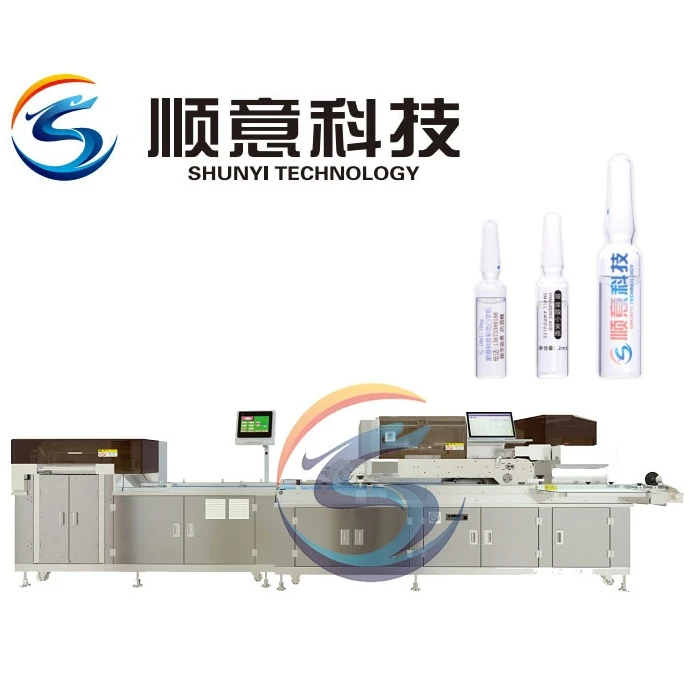
Let's take the UV Fast Drying Ampoule Printing Machine as an example. This type of machine uses UV - curing inks. These inks offer great adhesion as they are instantly cured by UV light, forming a strong bond with the printing surface. They also have good durability, resisting abrasion, moisture, and chemical exposure. If the ink wears off or fades easily, it could lead to confusion about the product, which can be a huge problem in the pharmaceutical industry.
Print Quality
Clear and sharp printing is a must in pharmaceutical printing. The ink needs to be able to produce high - resolution text, barcodes, and images. This is essential for accurate identification of the product, inventory management, and anti - counterfeiting measures. The viscosity of the ink plays a big role in print quality. If the ink is too thick, it may result in uneven printing, with blobs or streaks. On the other hand, if it's too thin, the lines may be faint and difficult to read.
Modern pharmaceutical printers, such as the Transfer Print Machine For Glass Ampoule, are designed to work with inks of specific viscosities to ensure optimal print quality. The ink also needs to have good color consistency. For example, if a particular color is used to indicate a specific drug type or dosage, it should look the same across all printed products.
Compatibility with Printing Methods and Surfaces
There are different printing methods used in the pharmaceutical industry, including inkjet printing, pad printing, and laser printing. Each method requires inks with specific properties. For instance, inkjet inks need to have low viscosity to be able to flow through the tiny nozzles of the printer. They also need to dry quickly to prevent smudging.
In addition to the printing method, the ink must be compatible with the surface it's being printed on. Glass, plastic, and paper all have different surface characteristics. Inks for glass ampoules need to adhere well to the smooth, non - porous surface of the glass. Plastic surfaces may require inks that can withstand the static electricity that often builds up on plastics.
Drying Time
The drying time of the ink is another important characteristic. In a high - volume pharmaceutical manufacturing environment, time is of the essence. Inks that dry quickly allow for faster production speeds. UV - curing inks, as mentioned earlier, are a popular choice because they dry almost instantly when exposed to UV light. This not only speeds up the production process but also reduces the risk of smudging or smearing during handling.
On the other hand, some solvent - based inks may take longer to dry. The drying time can be affected by factors such as temperature, humidity, and the thickness of the ink layer. Manufacturers need to consider these factors when choosing the ink for their pharmaceutical printers.
Resistance to Environmental Factors
Pharmaceutical products are stored and transported in various environmental conditions. The ink used for printing on these products needs to be resistant to factors like heat, cold, humidity, and light. For example, products that are stored in hot and humid climates may require inks that won't fade or run under such conditions.
Inks also need to be resistant to light to prevent any degradation of the printed information. Exposure to sunlight or artificial light over time can cause some inks to fade or change color. This is particularly important for products with expiration dates or other critical information that needs to remain legible throughout the product's lifespan.
Long - term Stability
Over time, the ink should maintain its properties. It shouldn't react with the printed substrate or the pharmaceutical product itself. For example, if an ink is used to print on a plastic container that holds a liquid medication, it shouldn't leach any chemicals into the medication or cause the plastic to degrade.
The ink should also remain stable in terms of its color and adhesion. Even after months or years of storage, the printed information should still be clear and intact. This is crucial for maintaining the integrity of the product and ensuring that patients and healthcare providers can rely on the information on the packaging.
Conclusion
So, there you have it – the key characteristics of inks used in pharmaceutical printers. Safety, adhesion, print quality, compatibility, drying time, resistance to environmental factors, and long - term stability are all important considerations.
If you're in the pharmaceutical industry and looking for the right Pharmaceutical Printer and the perfect ink to go with it, I'd love to have a chat. We can discuss your specific needs and find the best solutions for your printing requirements. Don't hesitate to reach out and start a conversation about procurement.
References
- European Medicines Agency (EMA) guidelines on packaging materials for pharmaceuticals.
- U.S. Food and Drug Administration (FDA) regulations on direct and indirect food additives and packaging materials.
- Technical literature from ink manufacturers on pharmaceutical - grade inks.