

What materials are the parts of an ampoule printing machine made of?
As a reliable supplier of ampoule printing machines, I often receive inquiries about the materials used in the construction of these sophisticated devices. Understanding the materials is crucial as it directly impacts the machine's performance, durability, and suitability for pharmaceutical applications. In this blog, I will delve into the various parts of an ampoule printing machine and the materials commonly used to make them.
Frame and Structure
The frame of an ampoule printing machine provides the structural support for all other components. It needs to be sturdy and rigid to ensure stable operation and accurate printing. Most commonly, the frame is made of high - quality steel, such as stainless steel or carbon steel.
Stainless steel is a popular choice due to its excellent corrosion resistance. In the pharmaceutical industry, where cleanliness and hygiene are of utmost importance, stainless steel frames can withstand frequent cleaning and disinfection without rusting or deteriorating. It also has good mechanical properties, providing sufficient strength to support the weight of other parts and resist deformation during operation.
Carbon steel, on the other hand, is known for its high strength and low cost. It can be heat - treated to further enhance its hardness and toughness. However, carbon steel is more prone to corrosion compared to stainless steel, so it usually requires proper surface treatment, such as painting or galvanizing, to protect it from the environment.
Conveyor System
The conveyor system is responsible for transporting ampoules through the printing process. The conveyor belts are typically made of materials that offer good friction and durability. One common material is rubber. Rubber conveyor belts have high friction coefficients, which ensure that the ampoules can be transported smoothly without slipping. They are also flexible and can adapt to different conveyor configurations.
In addition, some conveyor belts are made of food - grade plastics, such as polyethylene or polypropylene. These plastics are non - toxic and comply with the strict hygiene requirements of the pharmaceutical industry. They are resistant to chemicals and easy to clean, making them suitable for use in ampoule printing machines.
The rollers of the conveyor system are often made of steel or aluminum. Steel rollers are strong and can withstand heavy loads, while aluminum rollers are lightweight and have good corrosion resistance. They are usually coated with a layer of rubber or other materials to increase friction and protect the ampoules from damage.

Printing Mechanism
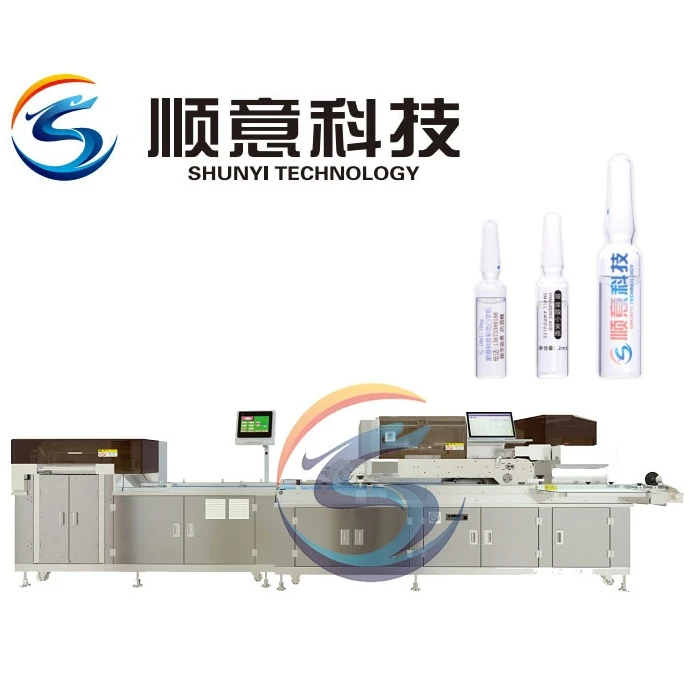
The printing mechanism is the core part of an ampoule printing machine. Different printing methods, such as inkjet printing, embossing printing, etc., use different materials in their components.
For inkjet printing, the print heads are the most critical components. The nozzles of the print heads are often made of ceramic materials. Ceramic has excellent chemical resistance and wear resistance, which can ensure the long - term stability of inkjet performance. The ink cartridges are usually made of plastic, which is lightweight and can be easily replaced.
In the case of Embossing Ampoule Pharmaceutical Printing Machine, the embossing dies are typically made of hardened steel or brass. Hardened steel dies have high hardness and can maintain their shape and precision during the embossing process. Brass dies are also popular because they are relatively easy to machine and have good thermal conductivity, which helps in the embossing process.
Ink Supply System
The ink supply system stores and delivers ink to the printing mechanism. The ink tanks are commonly made of plastic or stainless steel. Plastic ink tanks are lightweight and inexpensive, while stainless steel ink tanks are more durable and resistant to corrosion.
The pipes and connectors in the ink supply system are usually made of flexible plastic materials, such as PVC (polyvinyl chloride) or silicone. These materials are resistant to ink and can bend easily, allowing for flexible installation of the ink supply system.
Control Panel and Electrical Components
The control panel is used to operate and monitor the ampoule printing machine. The housing of the control panel is often made of plastic or aluminum. Plastic housings are lightweight and can be easily molded into different shapes. Aluminum housings are more durable and have better heat dissipation properties.
The electrical components inside the control panel, such as circuit boards, relays, and sensors, are made of a variety of materials. Circuit boards are typically made of fiberglass - reinforced epoxy resin, which provides good electrical insulation and mechanical strength. Relays and sensors may contain metal contacts, such as copper or silver, for good electrical conductivity.
Advantages of High - Quality Materials
Using high - quality materials in the construction of ampoule printing machines offers several advantages. Firstly, it improves the durability of the machine. A machine made of high - quality materials can withstand the rigors of continuous operation and frequent cleaning, reducing the need for frequent repairs and replacements.
Secondly, high - quality materials ensure the accuracy and consistency of printing. For example, a well - made print head with high - quality materials can produce clear and precise prints, which is crucial for pharmaceutical labeling.
Finally, materials that comply with pharmaceutical industry standards, such as food - grade plastics and stainless steel, ensure the safety and hygiene of the printing process, which is essential for pharmaceutical products.
Conclusion
In conclusion, the parts of an ampoule printing machine are made of a variety of materials, each selected for its specific properties and functions. From the frame to the control panel, every component plays an important role in the performance of the machine.
As a leading supplier of ampoule printing machines, we are committed to using high - quality materials in our products to ensure their reliability, accuracy, and compliance with pharmaceutical industry standards. Our Pharmaceutical Printer and Dry - in - second Ampoule Pharmaceutical Printing Machine are designed and manufactured with the best materials to meet the diverse needs of our customers.
If you are interested in our ampoule printing machines or have any questions about the materials and their properties, please feel free to contact us for further discussion and potential procurement. We are always ready to provide you with the best solutions and services.
References
- "Materials Science and Engineering: An Introduction" by William D. Callister, Jr.
- "Handbook of Pharmaceutical Manufacturing Formulations" by Sarfaraz N. Khatri.