

In the pharmaceutical industry, ampoule printing machines play a crucial role in ensuring that essential information is accurately and permanently marked on ampoules. As a leading ampoule printing machine supplier, we understand the significance of these machines in maintaining product integrity and compliance. In this blog, we will delve into the programming methods for ampoule printing machines, exploring the technical aspects and best practices that contribute to efficient and high - quality printing.
Understanding the Basics of Ampoule Printing Machines
Ampoule printing machines are designed to print various types of information on ampoules, such as batch numbers, expiration dates, dosage instructions, and logos. These machines need to be highly accurate and reliable, as the printed information is critical for product identification, traceability, and patient safety.
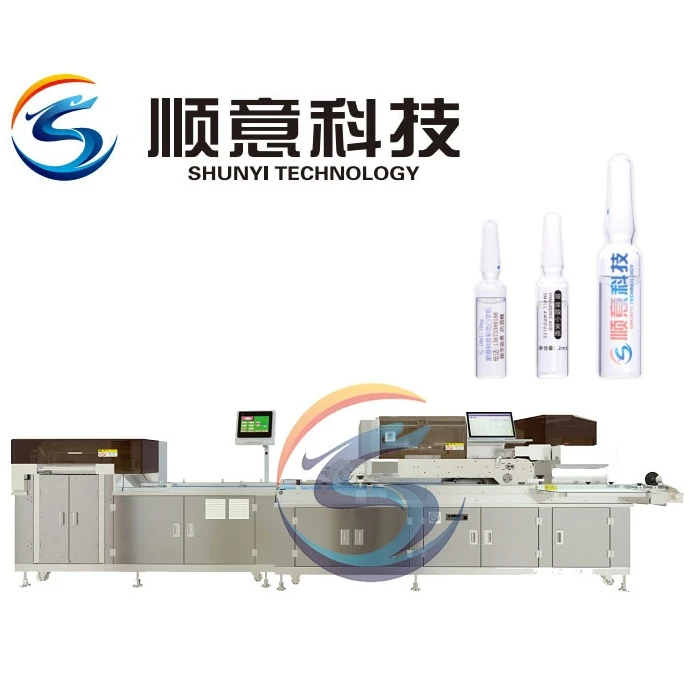
There are different types of ampoule printing machines available in the market, including Dry - in - second Ampoule Pharmaceutical Printing Machine and HD Ampoule Pharmaceutical Printing Machine. Each type has its own unique features and programming requirements.
Programming Languages and Software for Ampoule Printing Machines
The programming of ampoule printing machines typically involves the use of specialized software and programming languages. Most modern machines are equipped with user - friendly interfaces that allow operators to easily input and modify printing parameters.
PLC Programming
Programmable Logic Controllers (PLCs) are commonly used in ampoule printing machines. PLC programming involves writing code to control the machine's various functions, such as motor control, conveyor movement, and printing operations. The programming language used for PLCs is often ladder logic, which is a graphical programming language that resembles electrical relay circuits.
Ladder logic programming allows for easy implementation of sequential control, conditional statements, and timers. For example, a ladder logic program can be written to ensure that the printing head moves to the correct position on the ampoule before printing, and that the conveyor stops at the appropriate time to allow for accurate printing.
Embedded Software
In addition to PLC programming, many ampoule printing machines also use embedded software. Embedded software is a type of software that is specifically designed to run on a microcontroller or a microprocessor within the machine. This software is responsible for managing the machine's overall operation, including communication with sensors, actuators, and the printing mechanism.

The programming languages used for embedded software development vary depending on the machine's architecture. Commonly used languages include C and C++, which offer high - performance and low - level control. These languages allow developers to optimize the software for the specific requirements of the ampoule printing machine, such as fast printing speeds and precise positioning.
Programming Steps for Ampoule Printing Machines
Step 1: Define Printing Requirements
The first step in programming an ampoule printing machine is to clearly define the printing requirements. This includes determining the type of information to be printed, the font size and style, the printing position on the ampoule, and the printing quality standards.
For example, if the ampoule needs to be printed with a batch number and an expiration date, the programming should ensure that these two pieces of information are printed in the correct format and position. The font size should be legible, and the printing quality should meet the pharmaceutical industry's regulations.
Step 2: Set Up Machine Parameters
Once the printing requirements are defined, the next step is to set up the machine parameters. This involves adjusting the conveyor speed, the printing head pressure, the ink flow rate, and other relevant parameters.
The conveyor speed needs to be set according to the printing speed of the machine and the size of the ampoules. If the conveyor moves too fast, the printing may be blurred; if it moves too slow, the production efficiency will be affected. The printing head pressure and ink flow rate also need to be carefully adjusted to ensure clear and consistent printing.
Step 3: Program the Printing Pattern
After setting up the machine parameters, the next step is to program the printing pattern. This can be done using the machine's built - in software or a separate programming tool.
The programming tool allows operators to create and edit the printing pattern, including text, graphics, and barcodes. The pattern can be imported from a file or created directly on the software interface. Once the pattern is created, it can be saved and loaded into the machine for printing.
Step 4: Test and Optimize the Program
After programming the printing pattern, the next step is to test the program on a sample ampoule. This allows operators to check if the printing is accurate and meets the quality requirements.
If there are any issues with the printing, such as blurred text or incorrect positioning, the program needs to be optimized. This may involve adjusting the machine parameters, modifying the printing pattern, or fine - tuning the programming code.
Best Practices for Programming Ampoule Printing Machines
Regular Maintenance and Updates
To ensure the long - term performance of the ampoule printing machine, it is important to perform regular maintenance and updates. This includes cleaning the printing head, replacing the ink cartridges, and updating the machine's software.
Regular maintenance can prevent issues such as clogged nozzles and poor printing quality. Software updates can also improve the machine's functionality and security, as well as fix any bugs or glitches in the programming.
Training for Operators
Proper training for operators is essential for the successful programming and operation of ampoule printing machines. Operators should be trained on how to use the machine's programming software, how to set up the machine parameters, and how to troubleshoot common issues.
Training programs can be provided by the machine supplier or through external training institutions. By ensuring that operators are well - trained, the risk of errors and downtime can be reduced.
Conclusion
Programming an ampoule printing machine is a complex process that requires a good understanding of the machine's operation, programming languages, and the pharmaceutical industry's requirements. As a supplier of Pharmaceutical Printer, we are committed to providing high - quality machines and comprehensive technical support to our customers.
If you are interested in learning more about our ampoule printing machines or have any questions regarding programming and operation, please feel free to contact us for further discussion and potential procurement. We look forward to partnering with you to meet your pharmaceutical printing needs.
References
- "Automation in the Pharmaceutical Industry" - A technical report on the use of automation in pharmaceutical manufacturing processes.
- "Programming Languages for Industrial Automation" - A book that provides in - depth knowledge of programming languages used in industrial control systems.
- "Pharmaceutical Packaging Regulations" - Official regulations and guidelines for pharmaceutical packaging and labeling.