

Hey there! As a supplier of Buffer Conveyor, I've been getting a lot of questions about the braking system of our buffer conveyors. So, I thought I'd take some time to break it down for you.
First off, let's talk about what a buffer conveyor is. It's a crucial piece of equipment in many industries, especially in the pharmaceutical sector. Pharmaceutical Ampoule Conveyor and Ampoule Bottle Conveyor are types of buffer conveyors that are specifically designed to handle delicate pharmaceutical products like ampoules.
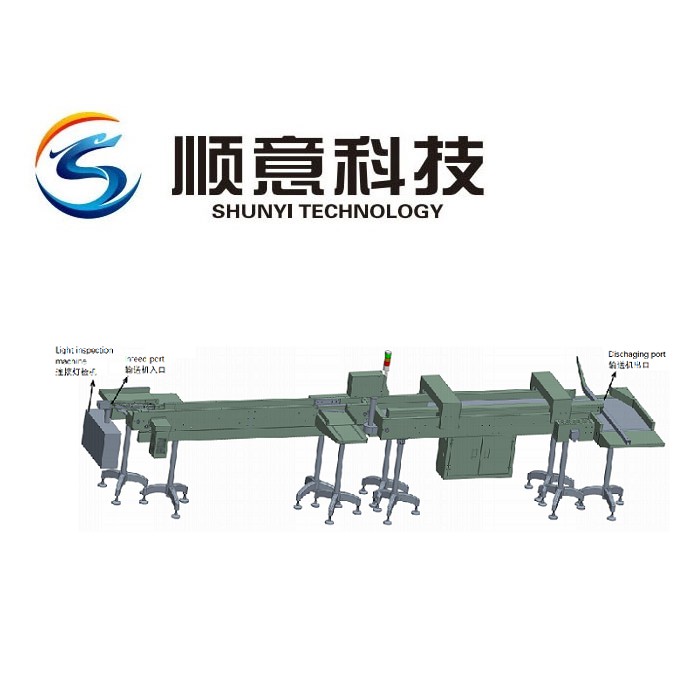

The braking system of a buffer conveyor is super important. It's what allows the conveyor to stop quickly and smoothly when needed. Imagine you're running a high - speed production line. If the conveyor can't stop on a dime, it could lead to all sorts of problems, like product jams, breakages, and even safety hazards.
There are a few different types of braking systems that we use in our buffer conveyors. One of the most common ones is the electromagnetic brake. This type of brake works by using an electromagnetic field to create friction and stop the conveyor's movement. When the power is cut off, the electromagnetic force is released, and the brake engages. It's a pretty reliable system, and it can stop the conveyor in a very short amount of time.
Another type of brake we use is the mechanical brake. Mechanical brakes rely on physical components, like pads and calipers, to create friction and slow down the conveyor. They're often used in situations where you need a more powerful and long - lasting braking force. For example, if your conveyor is carrying heavy loads or operating at high speeds, a mechanical brake might be the way to go.
Let's dig a little deeper into how these brakes work in a real - world scenario. Say you're running a pharmaceutical ampoule production line. The conveyor is moving at a steady pace, carrying ampoules from one station to the next. Suddenly, there's an issue up ahead, maybe a sensor detects a blockage or a malfunction. The control system sends a signal to the braking system.
If it's an electromagnetic brake, the control system will cut off the power to the electromagnet. As soon as that happens, the brake pads are forced against the conveyor's moving parts, creating friction and bringing the conveyor to a halt. It's a very fast process, usually taking just a fraction of a second.
With a mechanical brake, the process is a bit different. The control system activates a mechanism that applies pressure to the brake pads. The pads then squeeze against the conveyor's rotating components, like the drive shaft or the pulley. This friction slows down and eventually stops the conveyor.
Now, one of the things we pride ourselves on as a buffer conveyor supplier is the reliability of our braking systems. We know that in industries like pharmaceuticals, downtime is not an option. That's why we test our brakes rigorously before they leave the factory. We simulate all sorts of real - world scenarios, from normal operation to emergency stops, to make sure that the brakes will perform when it matters most.
We also pay a lot of attention to the maintenance of our braking systems. Just like any other mechanical or electrical component, brakes need to be checked and serviced regularly. For electromagnetic brakes, we recommend checking the electrical connections and the condition of the electromagnet periodically. For mechanical brakes, it's important to inspect the brake pads for wear and tear and replace them when necessary.
In addition to the basic braking function, our buffer conveyors also come with some advanced features. For example, we have a speed - sensing system that can adjust the braking force based on the conveyor's speed. If the conveyor is moving slowly, the brake will apply a lighter force. But if it's running at high speed, the brake will engage more aggressively to ensure a quick stop.
Another cool feature is the emergency stop override. In case of a serious emergency, operators can press an emergency stop button, which bypasses the normal control system and immediately activates the brakes. This gives an extra layer of safety to the production line.
Now, you might be wondering how our buffer conveyors with these advanced braking systems compare to the competition. Well, we've done our research, and we believe that our products are top - notch. Our braking systems are designed to be more efficient, more reliable, and easier to maintain than many of the other options out there.
We also offer a high level of customization. Every production line is different, and we understand that. So, if you have specific requirements for your braking system, like a certain stopping time or a particular type of load capacity, we can work with you to design a solution that fits your needs perfectly.
If you're in the market for a buffer conveyor, whether it's a Pharmaceutical Ampoule Conveyor or an Ampoule Bottle Conveyor, we'd love to have a chat with you. Our team of experts can help you figure out which braking system is right for your production line, and we can provide you with all the technical details and support you need.
Don't let a sub - par braking system slow down your production. Contact us today to discuss your buffer conveyor needs. We're confident that we can offer you a solution that will keep your production line running smoothly and safely.
References
- General knowledge of conveyor systems and braking technologies from industry experience.
- Technical manuals and research on electromagnetic and mechanical brakes.