

Hey there! I'm a supplier of space conveyors, and I've been getting a lot of questions lately about what it takes for a space conveyor to support scientific experiments. So, I thought I'd take a few minutes to break it down for you.
First off, let's talk about what a space conveyor is. In simple terms, it's a system that moves materials or equipment within a space environment, like a space station or a lunar base. These conveyors are crucial for scientific experiments because they help transport samples, tools, and other essentials from one place to another.
1. Precision and Accuracy
One of the most important requirements for a space conveyor supporting scientific experiments is precision. In space, even the slightest error can have a huge impact on the outcome of an experiment. For example, if you're conducting a delicate biological experiment, you need to ensure that the samples are moved with extreme accuracy.
The conveyor should be able to position items within a very tight tolerance. This means that it needs to have high - resolution sensors and precise control systems. For instance, some conveyors use laser sensors to accurately measure the position of objects on the belt or platform. These sensors can detect even the smallest movements and make real - time adjustments to keep everything on track.
2. Reliability
Reliability is another key factor. In space, it's not like you can just pop down to the local hardware store to pick up a replacement part if something goes wrong. A space conveyor needs to be able to operate continuously for long periods without breaking down.
This requires high - quality components and a robust design. The conveyor should be built to withstand the harsh conditions of space, including radiation, extreme temperatures, and microgravity. For example, the materials used in the construction of the conveyor should be resistant to radiation damage. Metals like titanium are often used because they are strong and have good radiation - resistant properties.
3. Compatibility with Scientific Equipment
The space conveyor must be compatible with the scientific equipment it's supposed to support. Different experiments use different types of equipment, and the conveyor needs to be able to handle them all.
For example, some experiments might require the conveyor to be able to handle fragile glassware or sensitive electronic components. In these cases, the conveyor should have a smooth and gentle movement to prevent any damage. On the other hand, if the experiment involves heavy machinery or large samples, the conveyor needs to have a high load - carrying capacity.
4. Cleanliness
Cleanliness is of utmost importance, especially when it comes to scientific experiments. Contamination can ruin an experiment and lead to inaccurate results. That's why a space conveyor needs to be designed to minimize the generation of particles and contaminants.
This is where our Pharmaceutical Clean Area Elevator Conveyor and Pharmaceutical Clean Area Space Conveyor come in handy. These conveyors are specifically designed to meet the strict cleanliness requirements of scientific experiments. They are made with materials that don't shed particles easily and are easy to clean and sterilize.
5. Adaptability
Space is a dynamic environment, and scientific experiments can change over time. A good space conveyor should be adaptable to these changes. It should be easy to reconfigure or modify to suit the needs of different experiments.
For example, the conveyor might need to be adjusted to accommodate a new type of sample or a different layout of the experiment area. This could involve changing the speed of the conveyor, adjusting the height of the platform, or adding new sensors or controls.
6. Low Power Consumption
Power is a precious resource in space. Every piece of equipment needs to be as energy - efficient as possible. A space conveyor should have a low power consumption rate to ensure that it doesn't drain too much energy from the space station's power supply.
This can be achieved through the use of energy - efficient motors and advanced control systems. For example, some conveyors use regenerative braking systems that can recover energy when the conveyor is slowing down or stopping.
7. Communication and Integration
The space conveyor needs to be able to communicate effectively with other systems on the space station. This includes the experiment control systems, the navigation systems, and the power management systems.
It should be able to receive commands from these systems and send back status information. For example, if the experiment control system needs to adjust the speed of the conveyor, it should be able to do so seamlessly. And the conveyor should be able to report back on its current status, such as its speed, position, and any error conditions.
8. Safety
Safety is always a top priority. The space conveyor should be designed with multiple safety features to protect both the equipment and the astronauts.
For example, it should have emergency stop buttons that can be easily accessed in case of an emergency. It should also have sensors that can detect any abnormal conditions, such as a jam or a collision, and automatically shut down the conveyor to prevent further damage.

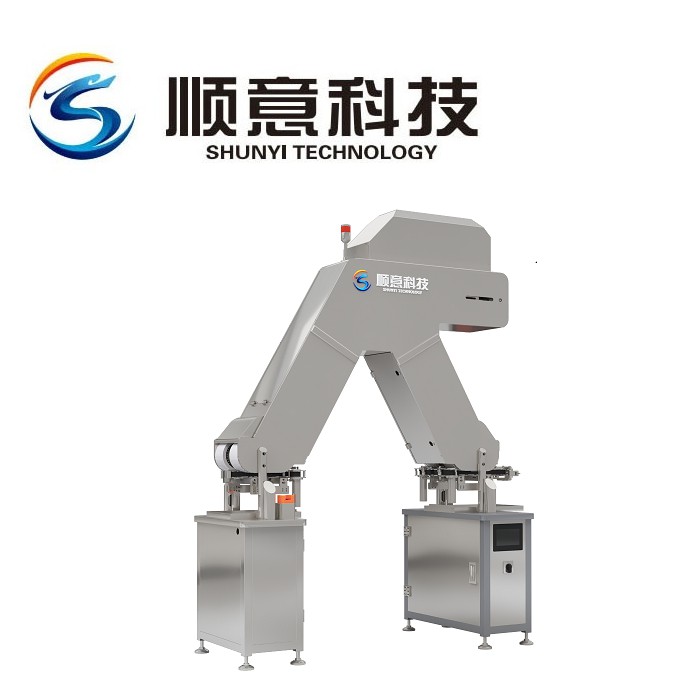
In conclusion, a space conveyor that can support scientific experiments needs to meet a wide range of requirements. From precision and reliability to compatibility and cleanliness, every aspect plays a crucial role in ensuring the success of the experiments.
If you're in the market for a space conveyor that meets all these requirements, look no further. We're a leading supplier of high - quality space conveyors, and we can work with you to find the perfect solution for your scientific experiments. Whether you need a custom - designed conveyor or a standard model, we've got you covered. Don't hesitate to get in touch with us to start the conversation about your procurement needs.
References
- "Space Systems Engineering" by Henry S. F. Cooper Jr.
- "Fundamentals of Spacecraft Design" by Richard W. Humble, Gary N. Henry, and Wiley J. Larson.