

How does a space conveyor resist radiation in space?
As a supplier of space conveyors, I've often been asked about how our products can withstand the harsh radiation environment of space. Radiation in space is a complex and challenging factor that can have detrimental effects on electronic components, mechanical parts, and even the structural integrity of equipment. In this blog post, I'll delve into the mechanisms and technologies we employ to ensure our space conveyors can resist radiation and operate reliably in space.
Understanding Space Radiation
Space radiation consists of various types of high - energy particles, including galactic cosmic rays (GCRs) and solar particle events (SPEs). GCRs are high - energy protons and atomic nuclei that originate from outside our solar system. They are present all the time and have a broad energy spectrum. SPEs, on the other hand, are sudden bursts of energetic particles, mainly protons, emitted by the Sun during solar flares or coronal mass ejections.
The effects of radiation on materials and electronics can be severe. Ionizing radiation can cause single - event effects (SEE) in electronic circuits, such as single - event upsets (SEUs), which can flip the state of a memory cell or disrupt the normal operation of a microprocessor. Over time, radiation can also cause cumulative damage to materials, leading to embrittlement, degradation of mechanical properties, and reduced lifespan of components.
Shielding Technologies
One of the primary ways our space conveyors resist radiation is through shielding. We use a combination of passive and active shielding techniques.
Passive Shielding
Passive shielding involves using materials with high atomic numbers to absorb and scatter radiation. For our space conveyors, we often use lead and polyethylene - based composites. Lead is a dense material that is effective at absorbing high - energy photons and charged particles. Polyethylene, on the other hand, is rich in hydrogen atoms, which are very effective at slowing down and absorbing protons.
We incorporate these shielding materials into the design of the conveyor structure. For example, the outer casing of the conveyor may be lined with a layer of lead - polyethylene composite. This layer acts as a barrier, reducing the amount of radiation that can penetrate into the sensitive internal components of the conveyor.
Another approach to passive shielding is the use of hierarchical shielding. We design the conveyor in such a way that different layers of shielding materials are used at different locations. The outermost layer may be a lightweight, low - density material that provides some initial protection and reduces the energy of incoming particles. The inner layers then use denser materials to further absorb and block the remaining radiation.
Active Shielding
In addition to passive shielding, we also explore active shielding technologies. Active shielding involves using magnetic or electric fields to deflect charged particles away from the conveyor.
Magnetic shielding is based on the principle that charged particles moving in a magnetic field will experience a force perpendicular to their direction of motion. We can generate a magnetic field around the conveyor using superconducting magnets. This magnetic field can deflect protons and other charged particles, reducing the radiation dose received by the conveyor.
Electric shielding, on the other hand, uses electric fields to repel or attract charged particles. By creating an electric potential difference around the conveyor, we can manipulate the trajectory of charged particles and prevent them from reaching the sensitive components.
Radiation - Hardened Components
Another key aspect of our radiation - resistance strategy is the use of radiation - hardened components. These are electronic and mechanical parts that are specifically designed to withstand the effects of radiation.
Electronic Components
For electronic components such as microprocessors, memory chips, and sensors, we use radiation - hardened versions. These components are manufactured using special processes and materials that make them more resistant to single - event effects.
For example, radiation - hardened microprocessors may have redundant circuits and error - correction mechanisms built in. If a single - event upset occurs in one circuit, the redundant circuit can take over and ensure the continued operation of the processor. Memory chips may use error - correcting codes (ECC) to detect and correct bit - flips caused by radiation.
Mechanical Components
Mechanical components also need to be radiation - resistant. We use materials that have good radiation tolerance, such as certain types of stainless steel and titanium alloys. These materials are less likely to experience embrittlement or degradation of mechanical properties due to radiation exposure.
We also design mechanical components with a margin of safety. For example, conveyor belts are made thicker and stronger than normal to account for any potential long - term radiation - induced degradation.
Monitoring and Adaptive Systems
To ensure the long - term reliability of our space conveyors, we incorporate monitoring and adaptive systems. These systems continuously monitor the radiation environment and the performance of the conveyor.
Radiation Monitoring
We install radiation sensors on the conveyor to measure the radiation dose and the energy spectrum of the incoming particles. This data is then transmitted back to Earth or used by on - board control systems. By monitoring the radiation levels, we can detect any abnormal increases in radiation and take appropriate actions.
Adaptive Systems
Based on the radiation monitoring data, the conveyor's control system can adjust its operation to optimize performance and reduce the risk of radiation damage. For example, if the radiation levels are very high, the conveyor may slow down or temporarily shut down some non - essential functions to reduce the stress on the components.
Real - World Applications
Our space conveyors have been used in various space missions, including satellite servicing and space station resupply. In these applications, the ability to resist radiation is crucial for the success of the mission.
For example, in satellite servicing missions, the conveyor is used to transfer tools and spare parts between the servicing spacecraft and the target satellite. The conveyor needs to operate reliably in the radiation - rich environment of space to ensure that the servicing operations can be completed successfully.
In space station resupply missions, the conveyor is used to unload cargo from the supply spacecraft. The long - term exposure to space radiation means that the conveyor must be able to withstand the cumulative effects of radiation over time.

Conclusion
In conclusion, our space conveyors are designed to resist radiation through a combination of shielding technologies, radiation - hardened components, and monitoring and adaptive systems. By using these strategies, we can ensure that our conveyors can operate reliably in the harsh radiation environment of space.
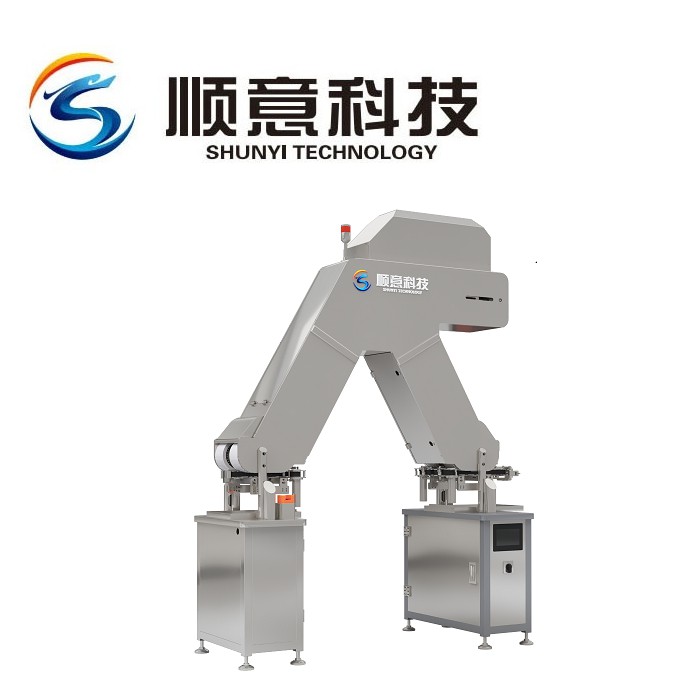
If you're interested in our Pharmaceutical Clean Area Elevator Conveyor or Pharmaceutical Clean Area Space Conveyor, or have any other requirements for space conveyors, please feel free to contact us for procurement and further discussions.
References
- "Fundamentals of Spacecraft Charging: Spacecraft Interactions with Space Plasmas" by H. R. Garrett
- "Radiation Effects in Semiconductor Devices: Basics and Applications" by M. Reed and R. E. Pease
- "Space Radiation Handbook" by NASA