

Hey there! I'm a supplier of space conveyors, and I've been getting a lot of questions lately about whether a space conveyor can be used for inter - planetary transportation. Well, let's dive right into it and explore this fascinating topic.
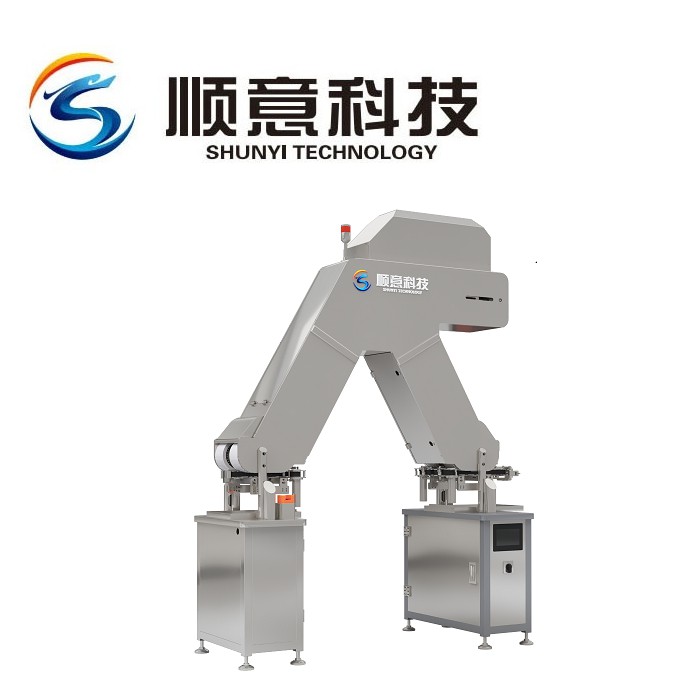
First off, what exactly is a space conveyor? Simply put, it's a system designed to move objects in space. At our company, we've developed some pretty nifty conveyors that are not only reliable but also highly efficient. We even have specialized models like the Pharmaceutical Clean Area Space Conveyor and the Pharmaceutical Clean Area Elevator Conveyor for specific industry needs.
Now, let's talk about inter - planetary transportation. It's a whole different ballgame compared to moving stuff around on Earth or even in low - Earth orbit. The distances between planets are mind - bogglingly huge. For example, the average distance from Earth to Mars is about 225 million kilometers. That's a long way to send a conveyor!
One of the biggest challenges for using a space conveyor for inter - planetary transportation is the construction and maintenance. Building a conveyor that spans such vast distances would require an enormous amount of materials. We'd need to launch thousands, if not millions, of tons of construction materials into space. And once it's built, how do we keep it in good working order? In the harsh environment of space, with radiation, micrometeoroids, and extreme temperature variations, wear and tear would be a major issue.
But it's not all doom and gloom. There are some potential benefits. For one, a space conveyor could provide a continuous and relatively low - energy way to move cargo between planets. Instead of using rockets, which are expensive and use a lot of fuel, a conveyor could rely on electrical power or other more sustainable energy sources. This could significantly reduce the cost of inter - planetary transportation in the long run.
Another advantage is the predictability. Rockets have to deal with launch windows and orbital mechanics, which can be very complex. A space conveyor, on the other hand, could operate on a more regular schedule. Cargo could be loaded onto the conveyor at one end and delivered to the other end in a more consistent manner.
Let's consider the technical aspects. We'd need to design a conveyor that can withstand the forces involved in moving objects across such long distances. The conveyor would have to be strong enough to support the weight of the cargo, as well as any structural loads. We'd also need to figure out how to move the cargo along the conveyor. One option could be using magnetic levitation or some other friction - less propulsion system. This would reduce energy consumption and wear on the conveyor components.

In terms of safety, a space conveyor could potentially be safer than rockets. Rockets are prone to explosions and other catastrophic failures. A conveyor, if properly designed and maintained, could offer a more stable and reliable way to transport goods. However, we'd still need to have safety protocols in place for things like emergency stops and dealing with any malfunctions.
Now, let's think about the economic side. The initial investment in building a space conveyor for inter - planetary transportation would be astronomical. But if it can reduce the cost of transporting cargo over time, it could be a game - changer. Industries that rely on space resources, like mining asteroids or setting up colonies on other planets, could benefit greatly from a more cost - effective transportation method.
We also have to consider the legal and regulatory aspects. There are currently no laws or regulations specifically for space conveyors. International agreements would need to be established to govern their use. Who would own the conveyor? How would disputes be resolved? These are all questions that need to be addressed.
Despite the challenges, I'm optimistic about the future of using space conveyors for inter - planetary transportation. With advancements in technology, we're getting closer to making this a reality. At our company, we're constantly working on improving our conveyor designs and exploring new ways to make them more suitable for long - distance space travel.
If you're in the space industry or have an interest in inter - planetary transportation, I encourage you to reach out to us. We'd love to have a chat about how our space conveyors could fit into your plans. Whether you're a researcher, a space agency, or a private company looking to expand into space, we're here to help.
In conclusion, while using a space conveyor for inter - planetary transportation is a very challenging idea, it's not impossible. There are many obstacles to overcome, but the potential rewards are huge. As a space conveyor supplier, we're excited to be part of this exploration and look forward to seeing what the future holds.
If you're interested in learning more about our products or discussing the possibilities of using a space conveyor for inter - planetary transportation, don't hesitate to get in touch. We're always open to new ideas and collaborations.
References
- "Fundamentals of Astrodynamics" by Roger R. Bate, Donald D. Mueller, and Jerry E. White
- "Space Systems Engineering" by Henry S. F. Cooper and Charles D. Hall