

Automation has become a driving force across various industries, streamlining processes, enhancing efficiency, and reducing human error. In the realm of space technology, the concept of a space conveyor is emerging as a revolutionary idea. As a supplier of space conveyors, I've often been asked the question: Can a space conveyor be automated? In this blog post, I'll explore the feasibility, challenges, and potential benefits of automating a space conveyor.

The Concept of a Space Conveyor
Before delving into automation, let's first understand what a space conveyor is. A space conveyor is a system designed to transport objects in space, whether it's moving resources between different parts of a space station, transferring materials from a spacecraft to a lunar base, or even facilitating the construction of large - scale space structures. These conveyors can range from simple mechanical belts to more complex robotic arms and track - based systems.
The need for space conveyors is growing as space exploration and utilization expand. With longer - duration space missions, the ability to move materials efficiently becomes crucial. For example, in a lunar base scenario, a space conveyor could be used to transport lunar regolith for processing into construction materials or to move supplies from a landing site to storage areas.
Feasibility of Automation
The short answer is yes, a space conveyor can be automated. Automation in space is not a new concept. We've seen automated systems in spacecraft for tasks such as docking, navigation, and scientific data collection. When it comes to space conveyors, automation offers several advantages.
One of the key benefits is the reduction of human involvement. In space, human presence is limited by factors such as life - support requirements, radiation exposure, and the high cost of sending astronauts. By automating the space conveyor, we can perform material - handling tasks without putting human lives at risk. For instance, in a high - radiation environment around a planet or during a long - distance mission, an automated conveyor can continue to operate without the need for constant human supervision.
Automation also enables precise control and high - speed operation. Robotic systems can be programmed to move objects with a high degree of accuracy, ensuring that materials are placed in the correct locations. This is especially important in space construction projects, where even a small misalignment can have significant consequences. Additionally, automated conveyors can operate continuously, increasing the overall throughput of material transport.
Challenges in Automating a Space Conveyor
However, automating a space conveyor is not without its challenges. One of the primary challenges is the harsh space environment. Space is characterized by extreme temperatures, radiation, vacuum, and micrometeoroid impacts. These conditions can cause significant wear and tear on the conveyor components and electronics. For example, the extreme temperature variations can cause materials to expand and contract, leading to mechanical failures. Radiation can damage electronic circuits, affecting the automation control systems.
To overcome these challenges, the conveyor components need to be designed with materials that can withstand the space environment. For example, using radiation - hardened electronics and heat - resistant materials can help ensure the long - term reliability of the automated system. Additionally, protective shielding can be installed to reduce the impact of micrometeoroids.
Another challenge is communication. In space, communication delays can be significant, especially when dealing with long - distance missions. This can make it difficult to control the automated conveyor in real - time. To address this issue, the conveyor system needs to be designed with autonomous decision - making capabilities. The system should be able to detect and respond to problems without relying on constant communication with Earth. For example, if a conveyor belt jams, the system should be able to identify the problem and attempt to fix it on its own.
Our Space Conveyor Solutions
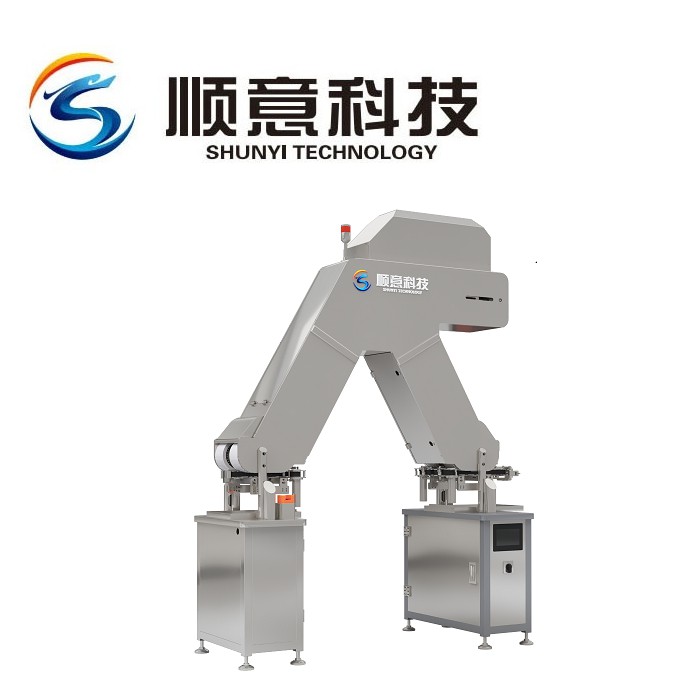
As a space conveyor supplier, we have been working on developing automated space conveyor systems that can overcome these challenges. Our Pharmaceutical Clean Area Space Conveyor is designed with advanced materials and technologies to ensure reliable operation in the space environment. It features radiation - hardened electronics and heat - resistant components, making it suitable for long - term space missions.
Our Pharmaceutical Clean Area Elevator Conveyor is another example of our innovative solutions. This elevator - style conveyor is automated to provide precise vertical transportation of materials. It is equipped with autonomous sensors that can detect any malfunctions and take corrective actions.
Potential Benefits of Automated Space Conveyors
The potential benefits of automated space conveyors are far - reaching. In addition to the safety and efficiency advantages mentioned earlier, automation can also lead to cost savings. By reducing the need for human labor and increasing the throughput of material transport, the overall cost of space operations can be significantly reduced.
Automated space conveyors can also enable new possibilities in space exploration and utilization. For example, they can facilitate the construction of large - scale space habitats, space factories, and even inter - planetary transportation networks. With the ability to move materials efficiently, we can build more complex and sustainable space infrastructure.
Conclusion
In conclusion, the automation of a space conveyor is both feasible and highly beneficial. While there are challenges to overcome, advancements in technology are making it increasingly possible to develop reliable and efficient automated space conveyor systems. As a space conveyor supplier, we are committed to pushing the boundaries of what is possible in space material handling.
If you are interested in exploring our space conveyor solutions or have any questions about automating your space - related material - handling needs, we invite you to contact us for a detailed discussion. Our team of experts is ready to work with you to find the best solution for your specific requirements.
References
- "Spacecraft Systems Engineering" by Peter Fortescue, John Stark, and Graham Swinerd.
- "Automation and Robotics in Space" research papers from international space agencies.
- Technical reports on space environment effects on materials and electronics.